
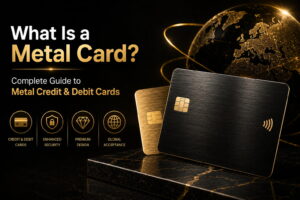
What Is a Metal Card?
A metal card is a payment card made from metal, typically stainless steel or aluminum, instead of standard plastic (PVC or PET). It functions like a regular credit or debit card but has a noticeably heavier weight, a distinct feel, and a more durable construction.
Metal cards can be issued directly by a bank, or created by converting an existing plastic card into a metal version while keeping the account, chip, and card details intact. The core purpose of a metal card is the same as any card: to make secure payments. What changes is the material, the manufacturing process, and the physical experience of using it.
Most people encounter the term “metal card” in one of two contexts:
- A premium bank-issued card (often tied to a rewards or invitation-only program)
- A metal conversion of an existing card, where the original plastic card’s chip is transferred into a metal body
Understanding this distinction matters, because it affects what a metal card can and cannot do.
How Metal Cards Are Made
Metal cards start as a solid or layered sheet of metal, cut to standard card dimensions (85.60 × 53.98 mm, per ISO/IEC 7810 standards). From there, manufacturers work with the metal to prepare it for personalization and functionality.
The typical production process includes:
- Material selection — stainless steel or aluminum, depending on desired weight and finish
- Cutting and shaping — the metal blank is cut to exact card size and thickness
- Surface preparation — brushing, polishing, or coating the surface before design work
- Personalization — laser engraving names, numbers, or designs directly into the metal
- Chip integration — embedding or transferring the EMV chip and magnetic stripe (for conversions)
- Quality inspection — checking edges, engraving depth, and functional components
This process differs meaningfully from plastic card manufacturing, which relies on printing and lamination rather than engraving. For a full breakdown of this process, see How Metal Cards Work.
Metal Card Materials: Stainless Steel vs. Aluminum
The material used affects weight, durability, and price. These are the two most common options.
| Feature | Stainless Steel | Aluminum |
|---|---|---|
| Weight | Heavier (12–18g typical) | Lighter (5–10g typical) |
| Durability | Very high resistance to bending | Durable, but softer than steel |
| Cost | Generally higher | Generally more affordable |
| Finish options | Brushed, matte, mirror | Brushed, matte, anodized colors |
| Common use | Premium/luxury cards | Everyday metal cards |
Both materials support laser engraving, though the depth and contrast can vary slightly based on the metal’s surface treatment. For a deeper comparison, see Metal Card Materials.
How a Metal Card Works
A metal card works the same way a plastic card does at the point of transaction — the functionality comes from the embedded chip, not the material surrounding it.
Key functional points:
- The EMV chip stores and transmits the same encrypted data as it would in a plastic card
- Magnetic stripe transactions work the same way, when present
- Metal itself does not process payments — it is the housing, not the technology
- Standard converted metal cards are swipe/insert (chip) compatible, not automatically tap-to-pay enabled
This last point is important. Metal doesn’t inherently block or enable contactless payment — that depends on whether an NFC antenna is present and properly integrated. On a standard metal conversion (where a chip is transferred from plastic to metal), contactless functionality is not typically included unless specifically engineered for it.
For compatibility details before converting a card, review the Card Compatibility Guide.
Metal Card Conversion: Turning a Plastic Card Into Metal
Metal card conversion is the process of taking an existing, active plastic card and rebuilding it in a metal body — without changing the account, card number, or bank relationship.
How the conversion process typically works:
- Card evaluation — checking chip type, card layout, and eligibility for conversion
- Chip removal — carefully extracting the EMV chip from the original plastic card
- Metal card preparation — cutting, engraving, and finishing the metal card body
- Chip transfer — securely embedding the original chip into the new metal card
- Functional testing — confirming the chip reads and functions correctly
- Final quality check — inspecting for engraving accuracy and structural integrity
This is different from applying for a metal card through a bank. Conversion works with a card you already own and use, and companies performing this service — including Royal Metal Card — do not issue bank cards themselves. The bank remains the issuer; the conversion service changes only the physical card material.
Metal Card vs. Plastic Card: Key Differences
| Factor | Metal Card | Plastic Card |
|---|---|---|
| Material | Stainless steel, aluminum | PVC or PET |
| Weight | 5–18g | 4–6g |
| Durability | High resistance to bending/cracking | Prone to wear over years |
| Personalization | Laser engraved | Printed/embossed |
| Perceived value | Premium feel | Standard |
| Contactless (NFC) | Only if specifically built-in | Common on modern cards |
| Cost to produce | Higher | Lower |
The biggest practical difference isn’t how the card pays — it’s how it feels, looks, and holds up over time. For a full side-by-side breakdown, see Metal Card Vs Plastic Card.
Metal Card Colors and Surface Finishes
Metal cards are available in a range of finishes that affect both appearance and how engraving shows up on the surface.
Common surface types:
- Brushed metal — subtle linear texture, reduces visibility of fingerprints
- Matte — flat, non-reflective finish
- Glossy/mirror — high-shine, reflective surface
- Anodized color finishes (aluminum only) — adds color without paint or ink
Engraving typically appears as a contrast — light engraving on dark finishes, or vice versa — created by removing a layer of the surface material rather than printing on top of it. This is why engraved text and designs on metal cards don’t fade, peel, or rub off the way printed plastic can.
See Metal Card Colors and Metal Card Surfaces for finish-specific examples.
Benefits of a Metal Card
People choose metal cards for a mix of practical and personal reasons.
Durability
Metal resists bending, cracking, and general wear far better than plastic, especially for cards carried daily in wallets or pockets.
Permanent personalization
Laser engraving is physically etched into the card, so names, numbers, or designs don’t wear off like printed plastic.
Distinct look and feel
The added weight and finish create a noticeably different in-hand experience compared to plastic.
Longevity
A well-made metal card can outlast the physical lifespan of most plastic cards, though the card’s actual expiration is still set by the issuing bank.
What a Metal Card Cannot Do
To set accurate expectations, it’s worth being direct about limitations:
- A metal card conversion does not issue a new bank account or card number
- Standard metal conversions do not add contactless/tap-to-pay if the original card didn’t have it, and conversion services don’t add NFC to cards that lack it
- Metal does not make a card “more secure” from a data-encryption standpoint — the chip technology determines that, not the material
- Not every card is eligible for conversion — chip type, card thickness, and design layout all affect feasibility
Being clear about these limits is part of making an informed decision, not a drawback of the format itself.
Caring for a Metal Card
Metal cards are durable, but proper care extends their appearance and function.
- Avoid deep scratches by storing the card away from keys or coins
- Clean with a soft, dry cloth — avoid abrasive cleaners on brushed or anodized finishes
- Keep the chip area free of dirt or debris for reliable reads
- Avoid excessive bending, even though metal resists it better than plastic
Full maintenance steps are available in the Care Guide.
Metal Card Pricing: What Affects the Cost
Metal card pricing varies based on several factors:
- Material — stainless steel generally costs more than aluminum
- Engraving complexity — detailed designs take more production time
- Conversion vs. new issuance — conversion services price differently than banks issuing premium cards
- Finish type — specialty finishes (colored anodizing, mirror polish) may add cost
For current pricing structures, see Pricing.
Frequently Asked Questions
Is a metal card more secure than a plastic card?
Security comes from the EMV chip technology, not the card material. A metal card is not inherently more secure than plastic — it’s more physically durable, which is a different attribute from data security.
Can any plastic card be converted into a metal card?
Not always. Eligibility depends on the chip type and card design. A compatibility check is typically needed before conversion
Does a metal card support tap-to-pay?
Only if an NFC antenna is specifically built into the card. Standard metal conversions, which transfer an existing chip into a metal body, typically retain chip functionality but do not automatically add contactless capability.
Will a metal card set off airport metal detectors?
No. A single card-sized piece of metal is far too small to trigger standard metal detectors.
Does metal card conversion change my card number or bank account?
No. Conversion changes the physical material only. The account, card number, and issuing bank remain the same, since the original chip is transferred rather than replaced.
How long does a metal card last?
Physically, metal cards resist wear significantly longer than plastic. However, the card’s active expiration date is still determined by the issuing bank, not by the card’s material lifespan.
Conclusion
A metal card is, at its core, a standard payment card rebuilt in a more durable, premium material — most commonly stainless steel or aluminum. Whether issued by a bank or converted from an existing plastic card, the underlying chip technology determines how the card functions, while the metal determines how it looks, feels, and holds up over time.
Understanding this distinction helps set realistic expectations: metal changes the physical experience of a card, not the banking relationship or payment technology behind it. For anyone considering a conversion, checking compatibility and understanding the process beforehand — as outlined throughout this guide — leads to a smoother, more informed decision.