
Table of Contents
ToggleHow to Make Metal Business Cards – Complete Manufacturing & Design Guide
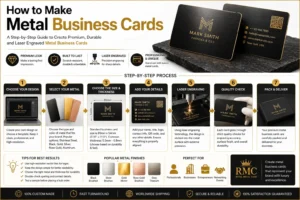
Metal business cards have become a premium alternative to traditional paper cards, offering exceptional durability, memorable first impressions, and long-term brand recognition. Unlike paper cards that wear out or get discarded, a professionally crafted metal business card reflects quality, attention to detail, and professionalism.
The manufacturing process combines material selection, precision engineering, digital design, laser technology, and quality finishing. Whether you’re a business owner exploring premium networking tools or simply curious about how these cards are produced, understanding the complete manufacturing process helps you make better design and purchasing decisions.
This guide explains how metal business cards are made, the materials used, production methods, design considerations, costs, and common mistakes—providing a comprehensive resource for both beginners and professionals.
What Are Metal Business Cards?
Metal business cards are precision-cut cards manufactured from thin sheets of premium metals such as Stainless Steel, Aluminum, Brass, Copper, or Titanium. Unlike printed paper cards, they are engraved, etched, or laser marked to create permanent designs that resist fading and wear.
These cards are commonly used by:
- Business executives
- Luxury brands
- Architects
- Designers
- Real estate professionals
- Entrepreneurs
- Financial advisors
- Automotive businesses
- Technology companies
- Creative agencies
Their premium appearance also makes them popular among professionals focused on Personal Branding and Luxury Accessories.
Why Choose Metal Instead of Paper?
| Feature | Metal Business Card | Paper Business Card |
|---|---|---|
| Durability | Extremely High | Low |
| Water Resistance | Excellent | Poor |
| Premium Appearance | Excellent | Standard |
| Lifetime | Many Years | Months |
| Scratch Resistance | High (depending on finish) | Low |
| Custom Shapes | Yes | Limited |
| Laser Engraving | Yes | No |
| Memorability | Very High | Average |
For readers comparing premium and traditional options, see Metal Card Vs Plastic Card for additional insights into durability and material performance.
Materials Used to Make Metal Business Cards
Material selection determines the appearance, weight, durability, and manufacturing method.
Stainless Steel
The most popular material because it offers:
- Excellent durability
- Corrosion resistance
- Premium weight
- Smooth engraving
- Long service life
Stainless steel is ideal for luxury business cards intended for long-term professional use.
Aluminum
Aluminum is lightweight and easier to machine.
Advantages include:
- Lower manufacturing cost
- Lightweight feel
- Good corrosion resistance
- Available in many anodized colors
- Suitable for colorful designs
Brass
Brass creates a luxury gold appearance with a classic aesthetic.
Best suited for:
- High-end branding
- Executive cards
- Vintage designs
Copper
Copper develops a unique patina over time and provides an artisan appearance.
Often selected for:
- Handmade products
- Luxury craftsmanship
- Boutique businesses
Titanium
Titanium provides exceptional strength while remaining lightweight.
Benefits include:
- Premium appearance
- Outstanding durability
- Corrosion resistance
- High-end positioning
Learn more about the characteristics of these materials in Metal Card Materials.
Step 1: Create the Card Design
Every metal business card begins with a digital design.
Professional designers typically use:
- Adobe Illustrator
- CorelDRAW
- AutoCAD
- Affinity Designer
- Vector graphics software
Important design elements include:
- Company logo
- Name
- Position
- Contact information
- QR Code
- Website
- Social media
- Brand iconography
Since engraving requires vector artwork, raster images usually need conversion before manufacturing.
Step 2: Select Card Thickness
Metal business cards are available in different thicknesses.
| Thickness | Typical Use |
|---|---|
| 0.3 mm | Lightweight promotional cards |
| 0.5 mm | Standard premium cards |
| 0.8 mm | Luxury executive cards |
| 1.0 mm | Ultra-premium designs |
Thicker cards create a stronger premium impression but increase manufacturing costs.
Step 3: Cut the Metal Sheet
Once the design is approved, manufacturers cut individual cards from larger metal sheets.
Common cutting technologies include:
- Fiber laser cutting
- CNC machining
- Chemical etching
- Precision stamping
Laser cutting is the preferred option because it provides:
- Smooth edges
- High accuracy
- Minimal waste
- Excellent repeatability
Step 4: Engrave the Design
One of the most important stages is Laser Engraving.
High-powered fiber lasers permanently engrave:
- Logos
- Text
- QR codes
- Decorative patterns
- Serial numbers
- Personalized information
Unlike printed ink, laser engraving becomes part of the metal surface and does not peel or fade under normal use.
Step 5: Apply Surface Finish
After engraving, manufacturers apply a surface finish.
Common finishes include:
- Matte
- Brushed
- Mirror polish
- Satin
- Sandblasted
- Black coated
- PVD colored
- Frosted
Different finishes influence:
- Reflection
- Scratch visibility
- Premium appearance
- Grip
See Metal Card Surfaces for a deeper look at available textures and finishes.
Step 6: Add Color (Optional)
Many manufacturers enhance designs using:
- UV printing
- Enamel filling
- Anodizing (for aluminum)
- PVD coating
- Electroplating
Popular colors include:
- Black
- Gold
- Silver
- Rose Gold
- Blue
- Red
- Gunmetal
Explore more finish options in Metal Card Colors.
Step 7: Add Special Features
Premium metal business cards often include advanced customization.
Examples include:
- Cut-out logos
- Window designs
- Rounded corners
- Unique shapes
- Etched patterns
- Sequential numbering
- QR codes
- NFC chips (only when specifically designed for smart business cards)
- Raised elements
- Multi-layer construction
Not every manufacturer offers these options, and certain features require specialized production equipment.
Manufacturing Methods Compared
| Method | Precision | Cost | Best For |
|---|---|---|---|
| Laser Engraving | Excellent | Medium | Premium customization |
| Chemical Etching | High | Medium | Fine details |
| CNC Milling | Excellent | High | Luxury cards |
| Stamping | Good | Low (large runs) | Bulk production |
| UV Printing | Good | Medium | Full-color artwork |
Design Best Practices
A successful metal business card balances aesthetics with readability.
Recommended practices include:
- Keep information concise.
- Use high-contrast designs.
- Leave sufficient spacing around text.
- Use vector artwork.
- Prioritize your logo.
- Test QR codes before production.
- Avoid overly complex artwork that may lose detail during engraving.
Common Mistakes to Avoid
Many first-time buyers overlook important production considerations.
Avoid these common issues:
- Using low-resolution artwork
- Choosing fonts that are too small
- Adding excessive information
- Ignoring edge safety margins
- Selecting finishes that reduce readability
- Forgetting bleed requirements
- Skipping prototype approval
Quality Control Before Delivery
Professional manufacturers inspect every card for:
- Accurate dimensions
- Clean engraving
- Sharp edges
- Surface consistency
- Finish quality
- Color accuracy
- Packaging protection
Quality inspection reduces defects before shipping.
Metal Business Cards vs Digital Business Cards
| Feature | Metal Card | Digital Card |
|---|---|---|
| Physical Presence | Yes | No |
| Premium Feel | Excellent | None |
| Durability | Excellent | Unlimited (digital) |
| Internet Required | No | Usually Yes |
| Brand Memorability | Very High | Moderate |
| Long-Term Value | Excellent | Depends on platform |
Many professionals now combine engraved QR codes on metal cards with digital contact-sharing tools for a hybrid networking experience.
Cost Factors
The price of metal business cards depends on:
- Material type
- Card thickness
- Quantity ordered
- Laser engraving complexity
- Color finishing
- Custom cut-outs
- Packaging
- Individual personalization
Higher quantities generally reduce the cost per card. For budgeting considerations, refer to Pricing.
Sustainability Considerations
Metal business cards can be a more sustainable option than frequently reprinted paper cards because they:
- Have a long service life
- Resist wear and moisture
- Can be recycled at the end of their lifecycle
- Reduce the need for repeated reprinting
Choosing recyclable materials such as stainless steel or aluminum can further improve environmental performance.
Related Technology: Metal Payment Cards
The manufacturing techniques used for metal business cards are similar to those used for premium Metal Credit Card and Metal Debit Card products. These often involve Laser Engraving, Custom Design, and Premium Materials, but payment cards also require integration with EMV Chip technology and compatibility with Visa, Mastercard, or American Express standards. They must function reliably with ATM Compatibility, POS Terminals, Payment Technology, and modern Card Security requirements. This specialized process, known as Metal Card Conversion, differs significantly from producing business cards because it preserves the functionality of an existing payment card rather than creating a contact card.
Readers interested in payment card manufacturing can also explore How Metal Cards Work and Card Compatibility Guide.
Frequently Asked Questions
How are metal business cards made?
Metal business cards are manufactured by cutting sheets of metal, engraving or etching the design, applying surface finishes, and performing quality inspections before packaging.
Which metal is best for business cards?
Stainless steel is generally the best choice because it combines durability, corrosion resistance, premium appearance, and excellent engraving quality. Aluminum is a strong alternative when lower weight or vibrant anodized colors are priorities.
Can metal business cards be engraved permanently?
Yes. Fiber laser engraving creates permanent markings that become part of the metal surface and resist fading, peeling, and normal wear.
Are metal business cards worth the investment?
For professionals who regularly network, attend events, or represent premium brands, metal business cards can leave a stronger impression and last significantly longer than paper cards, helping reinforce a high-quality brand image.
Can metal business cards include QR codes?
Yes. QR codes can be laser engraved or printed onto the card and linked to websites, digital portfolios, contact details, booking pages, or social media profiles.
Do metal business cards scratch easily?
High-quality stainless steel cards are resistant to everyday wear, but no finish is completely scratch-proof. Choosing an appropriate finish and following a basic Metal Card Care Guide can help maintain their appearance over time.
Conclusion
Metal business cards combine precision manufacturing, premium materials, and thoughtful design to create a networking tool that stands out long after an introduction. From selecting Stainless Steel or Aluminum to laser engraving, finishing, and quality control, each production stage contributes to the final product’s durability and visual appeal.
The same attention to detail used in high-end metal business cards also underpins premium payment card customization. Manufacturers such as Royal Metal Card apply similar precision techniques when creating custom engraved metal payment cards through compatible Metal Card Conversion processes, demonstrating how advanced manufacturing and craftsmanship can elevate everyday metal products without compromising quality or functionality.