
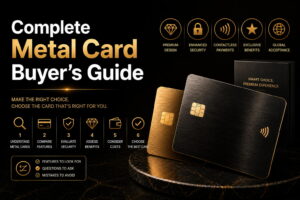
What Should You Know Before Buying a Metal Card?
Before buying a metal card, you should understand four key decision points: whether your existing card is eligible for conversion, which material and finish suit your needs, what engraving options are available, and what realistic pricing and turnaround times look like. Getting these right upfront prevents most of the common issues buyers run into after ordering.
This guide walks through the entire decision-making process step by step, from initial eligibility to final delivery, so you know exactly what to expect before committing to an order.
Step 1: Determine If Your Card Is Eligible for Conversion
Before choosing materials or designs, the first question is whether your existing card can be converted at all.
What affects eligibility:
- Chip type and placement on the original card
- Card thickness and structural layout
- Whether the card is currently active and undamaged
Most standard debit and credit cards with a visible EMV chip are candidates for conversion, but layout differences between banks can affect feasibility. Submitting card details for a quick Eligibility Check before ordering avoids delays later in the process.
Step 2: Choose Your Material
Material affects weight, cost, and finish options, so it’s worth deciding early.
| Material | Weight | Cost | Finish Options |
|---|---|---|---|
| Stainless steel | Heavier | Higher | Brushed, matte, mirror |
| Aluminum | Lighter | More affordable | Brushed, matte, anodized color |
Questions to ask yourself:
- Do I want maximum weight and premium feel, or a lighter, more affordable option?
- Am I interested in colored finishes? (Only available on aluminum)
- Is budget or material prestige the higher priority?
Step 3: Choose a Surface Finish
The finish affects both the card’s appearance and how engraving will look once applied.
Common finish types:
- Brushed — textured, fingerprint-resistant, understated
- Matte — flat, non-reflective, minimalist
- Glossy/mirror — reflective, high-contrast engraving
- Anodized color — solid color finish, aluminum only
If engraving is a priority, mirror and matte finishes tend to produce the strongest visual contrast. Brushed finishes offer a more subtle, everyday look. A visual comparison is available in Metal Card Finish Comparison.
Step 4: Plan Your Engraving Design
Engraving is where most of the personalization decisions happen, and it’s worth planning before submitting an order.
Common engraving elements:
- Name or business name
- Logo or custom artwork
- Card number and expiration (re-engraved to match original)
- Decorative patterns or borders
Design tips:
- Simple, bold designs typically engrave with the clearest contrast
- Fine detail can be lost on certain finishes — check with your provider first
- Logos should be submitted in high-resolution, vector format when possible
For inspiration and formatting guidance, see Metal Card Pre Made Designs.
Step 5: Understand the Conversion Process
Knowing what actually happens during conversion helps set realistic expectations for turnaround and handling.
Typical process:
- Card eligibility confirmed
- Design and engraving details finalized
- Original chip carefully removed from the plastic card
- Metal card body cut, finished, and engraved
- Chip transferred and tested for function
- Final quality inspection before shipping
Most providers, including Royal Metal Card, handle the chip transfer as the most technically sensitive part of the process, since chip damage would affect the card’s usability. A full breakdown of this process is available in Conversion Process Timeline.
Step 6: Confirm What Won’t Change
A few things stay exactly the same after conversion, and it’s worth confirming this before ordering.
- Your account number and bank relationship
- Your credit or debit account itself
- Your PIN and account security settings
- The chip’s underlying transaction technology
What changes is strictly the card’s physical body — material, weight, engraving, and finish.
Step 7: Set Realistic Expectations on Turnaround and Pricing
Pricing and turnaround vary based on material, design complexity, and provider workload.
General cost factors:
- Material (steel typically costs more than aluminum)
- Engraving complexity and detail level
- Finish type (specialty finishes may cost more)
- Rush processing, if offered
Typical turnaround factors:
- Standard processing time for design and engraving
- Shipping method and destination
- Whether design revisions are needed before production
A detailed cost breakdown is available in Metal Card Cost Breakdown.
Common Buyer Mistakes to Avoid
- Skipping the eligibility check — leads to delays if the card isn’t compatible
- Submitting low-resolution logos — results in blurred or inconsistent engraving
- Assuming contactless payment carries over automatically — confirm this before ordering if it matters to you
- Choosing finish before considering engraving contrast — some finishes hide fine detail better than others
- Not confirming current card is active — inactive or expired cards may not be eligible for conversion
Avoiding these issues upfront leads to a smoother process and fewer surprises after ordering.
Buyer’s Checklist
Use this as a quick pre-order reference:
- Confirm card eligibility (chip type, thickness, layout)
- Choose material (stainless steel or aluminum)
- Select a finish (brushed, matte, mirror, or anodized color)
- Finalize engraving design (text, logo, or artwork)
- Confirm whether contactless functionality matters and is possible
- Review pricing and turnaround expectations
- Verify shipping details and delivery timeline
Frequently Asked Questions
What’s the first step in buying a metal card?
Confirming whether your existing card is eligible for conversion. This depends on chip type, card thickness, and overall design layout.
Can I keep my current bank account and card number with a metal card?
Yes. Conversion only changes the card’s physical material — your account, card number, and bank relationship stay the same.
How do I know which material to choose?
Stainless steel offers a heavier, premium feel at a higher price point, while aluminum is lighter, more affordable, and supports additional color finishes.
Will my new metal card support tap-to-pay?
Only if contactless functionality is specifically confirmed and included during conversion. It isn’t automatically added by default.
How long does the entire process typically take?
Turnaround depends on design complexity and provider workload, but most orders move through eligibility, design, engraving, and chip transfer within a defined production timeline provided at order confirmation.
Conclusion
Buying a metal card is a straightforward process once broken into clear steps: confirming eligibility, choosing material and finish, finalizing engraving, and understanding what stays the same versus what changes. The card’s function remains tied to its original chip throughout, while every other decision — material, finish, and design — shapes the physical product you’ll actually use.
Working through each step before ordering leads to a card that matches expectations on arrival, with no surprises around functionality, pricing, or timeline.