
How to Convert Plastic Credit or Debit Card to Metal?
Yes. Most plastic credit and debit cards with a standard EMV chip can be converted into a metal card by transferring the chip into a stainless steel or aluminum body. The process keeps your account, card number, and bank relationship exactly the same — only the card’s physical material changes.
This guide walks through the entire conversion process for both credit and debit cards, what determines eligibility, and what to prepare before ordering.
Credit Card vs. Debit Card Conversion: Is There a Difference?
Functionally, no. Both card types rely on the same EMV chip technology, so the conversion process itself doesn’t differ based on card type.
What can differ between card types:
| Factor | Credit Card | Debit Card |
|---|---|---|
| Chip technology | Standard EMV | Standard EMV |
| Conversion process | Identical | Identical |
| Card layout/design | Varies by issuer | Varies by issuer |
| Replacement if lost | Through credit card issuer | Through bank |
The real variable isn’t credit vs. debit — it’s the specific card’s chip placement and design layout, which varies more by issuing bank than by card type. This is covered in detail in our Card Eligibility Guide.
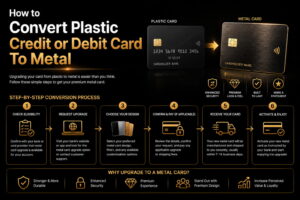
Step-by-Step: How to Convert Your Card
Step 1: Check Card Eligibility
Before anything else, confirm your card qualifies for conversion. This depends on:
- Chip type and placement
- Card thickness
- Overall design layout of the original card
Most standard debit and credit cards issued in the last several years meet these requirements, but it’s worth confirming before ordering. A quick Card Eligibility Guide check upfront prevents delays later.
Step 2: Choose Your Material
Decide between stainless steel and aluminum based on weight preference, finish options, and budget.
| Material | Weight | Finish Options | Typical Cost |
|---|---|---|---|
| Stainless steel | Heavier | Brushed, matte, mirror | Higher |
| Aluminum | Lighter | Brushed, matte, anodized color | More affordable |
A full comparison is available in our Metal Card Materials And Finishes guide.
Step 3: Select Engraving and Design
Decide what will be engraved on the card — typically your name, the re-created card number and expiration, and any additional design elements or logo.
Tips for this step:
- Simple, bold text engraves with the clearest legibility
- High-resolution logos produce cleaner engraving results
- Finish choice affects contrast, so it’s worth deciding material and design together
Step 4: Submit Your Order
Provide your card details and confirm your original card is active and undamaged. Inactive, expired, or physically damaged cards typically aren’t eligible for conversion.
Step 5: Chip Extraction
The original EMV chip is carefully removed from your plastic card. This step requires precision, since any damage to the chip would prevent the conversion from working.
Step 6: Chip Embedding Into the Metal Body
The extracted chip is installed into the newly cut and finished metal card, positioned to match standard terminal read requirements.
Step 7: Laser Engraving
Your chosen design, name, and card details are engraved directly into the metal surface.
Step 8: Functional Testing
The completed card is tested to confirm the chip reads correctly and processes transactions normally.
Step 9: Final Quality Check and Shipping
The card undergoes a last inspection for engraving accuracy and build quality before being shipped.
What You’ll Need Before Starting the Process
-
Your active, physical plastic credit or debit card
- Confirmation that the card is undamaged and currently in use
- Your preferred material and finish selection
- Design details for engraving (name, logo, layout preferences)
Having these ready before ordering shortens the overall process, since design delays are one of the most common reasons conversion timelines extend.
What Happens to Your Original Plastic Card?
Once the chip is extracted, the original plastic card is no longer functional, since the chip — the component that actually processes transactions — has been moved to the new metal card. The plastic card becomes essentially a shell.
This is why the process is described as conversion rather than duplication — there’s only ever one functional card at the end of the process, just in a different material.
What Stays Identical After Conversion
| Element | Status After Conversion |
|---|---|
| Account number | Unchanged |
| Bank or card issuer | Unchanged |
| PIN | Unchanged |
| Credit limit / account balance | Unchanged |
| Chip encryption | Unchanged |
| Card expiration date | Unchanged |
The only things that change are the material, weight, personalization method, and finish — nothing about the underlying account is affected.
Common Questions Before Converting
Will My Converted Card Still Work at ATMs?
Yes. Since the same chip is transferred and tested for function, the card works at ATMs and payment terminals exactly as it did in plastic form.
Does Conversion Affect My Credit Score?
No. Conversion doesn’t involve a credit check, new account, or any interaction with your credit profile. It’s a physical modification to an existing card only.
What If My Card Has Contactless Payment Now?
Standard conversions transfer the chip only. If contactless (NFC) functionality is important to you, this needs to be discussed and confirmed separately, since it isn’t included by default in a chip-only transfer.
Can I Convert a Card That’s About to Expire?
It’s best to convert a card with sufficient time before expiration, since the metal card will carry the same expiration date as the original. Converting a card close to expiring means you may need a new conversion soon after your bank issues a replacement.
Credit Card Conversion vs. Debit Card Conversion: Quick Comparison
| Consideration | Credit Card | Debit Card |
|---|---|---|
| Process steps | Identical | Identical |
| Common motivation | Rewards card branding, professional use | Everyday durability, personalization |
| Replacement process if lost | Through card issuer | Through bank |
| Eligibility check needed | Yes | Yes |
Frequently Asked Questions
Can I convert both a credit card and a debit card to metal?
Yes. The conversion process works the same way for both card types, since both rely on standard EMV chip technology.
Do I lose my rewards or benefits when converting a credit card to metal?
No. Conversion doesn’t affect your account, so any rewards, points, or benefits tied to your credit card remain exactly as they were.
What happens to my old plastic card after conversion?
Once the chip is extracted, the plastic card no longer functions, since the component that processes transactions has been moved to the new metal card.
Is there a difference in cost between converting a credit card vs. a debit card?
No. Pricing is based on material, finish, and design complexity — not on whether the original card is a credit or debit card.
How do I know if my specific card is eligible for conversion?
Eligibility depends on chip type, card thickness, and design layout. A quick check with your provider before ordering confirms whether your specific card qualifies.
Will converting my card affect my ability to dispute charges or contact customer support?
No. Since your account and card number remain unchanged, all standard bank or issuer support processes continue to work exactly as before.
Conclusion
Converting a plastic credit or debit card to metal is a well-defined, repeatable process: check eligibility, choose material and design, transfer the chip, engrave the card, and confirm functionality. Whether the original card is a credit card or debit card, the process and outcome are the same — a fully functional metal card carrying the same account, chip, and card number as before.
Knowing what to prepare beforehand and what stays unchanged throughout the process makes it much easier to go into conversion with realistic, accurate expectations.